

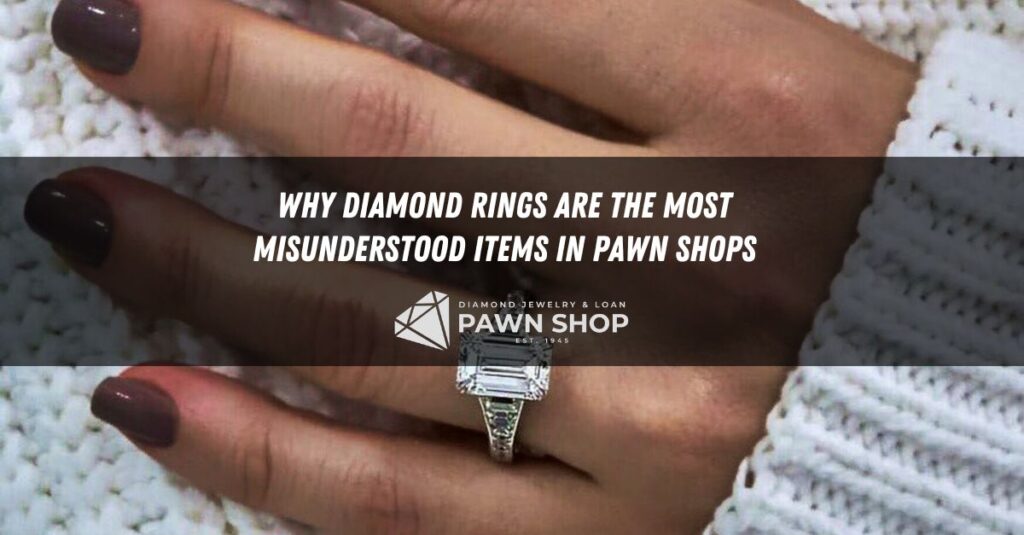
Diamond rings are arguably the most misunderstood items in the pawn industry. They carry deep sentimental value, command high prices in jewelry stores, and yet often get appraised for a fraction of what owners expect. The gap between perception and payout leaves many people confused, frustrated, and sometimes shortchanged.
Understanding why this happens can save you money and heartache. In this post, we’ll break down why certification matters, why diamonds are so frequently undervalued, and what separates a fair appraisal from a lowball offer. By the end, you’ll know exactly what to look for before you hand over your diamond ring.
The Certification Gap: Why Paperwork Changes Everything
Here’s a hard truth: a diamond without certification is treated very differently than one with it.
Certification from a respected lab—like the Gemological Institute of America (GIA)—provides an objective, third-party assessment of a diamond’s quality. It documents the famous “4 Cs”: cut, color, clarity, and carat weight. These four factors determine a diamond’s true worth, and a GIA report removes the guesswork.
Without that paperwork, a pawnbroker has to estimate quality on the spot. Most will err on the side of caution, assuming lower grades to protect themselves from overpaying. That conservative approach almost always works against you, the seller.

Why GIA Certification Carries So Much Weight
Not all certifications are created equal. The GIA pioneered the diamond grading system and is widely regarded as the strictest and most consistent lab in the world. A diamond graded by the GIA tends to hold its value better than one graded by less rigorous labs, which sometimes inflate grades.
If you have the original GIA report, bring it. That single document can dramatically increase the offer you receive for your diamond ring, because it eliminates the risk the buyer would otherwise build into their price.
Why Diamonds Get Undervalued at Pawn Shops
Even certified diamonds often fetch less than owners hope. Several factors drive this disconnect.
Retail markup is steep. The price you paid at a jewelry store includes massive markups—sometimes 100% to 300% over wholesale. When you sell, you’re entering the resale market, where prices reflect what the next buyer will actually pay. That number is far lower than the retail sticker.
Diamonds aren’t as rare as marketing suggests. Decades of advertising convinced shoppers that diamonds are scarce treasures. In reality, supply is plentiful, and the resale market is flooded with pre-owned stones. Abundance keeps secondhand prices down.
Condition and setting matter. Scratches, chips, and outdated settings reduce value. A beautiful stone in a worn or unfashionable mounting may need recutting or resetting before resale, and that cost gets subtracted from your offer.
Emotional value doesn’t transfer. Your ring may be priceless to you, but sentiment has no resale value. Buyers price the gem and metal, not the memories attached to them.
The Real Reason: Resale and Liquidity Over Gem Quality
Here’s the insight most people miss. Many pawn shops aren’t primarily interested in the gemological brilliance of your diamond. They’re focused on resale and liquidity—how quickly and easily they can turn that ring back into cash.
A general pawn shop deals in everything from power tools to electronics to musical instruments. Diamonds are just one more item on the shelf. Staff at these shops often lack deep gemological training, so they default to safe, low estimates based on quick resale potential rather than true quality.
This is why two appraisals can differ so dramatically. A shop that simply wants to flip the ring fast will offer less than a specialist who understands the stone’s actual market value and has the right buyers lined up.
How to Spot a Shop That Understands Diamonds
When you’re ready to sell or pawn a diamond ring, look for these signs of expertise:
- In-house gemological knowledge. Does the staff discuss the 4 Cs, or do they just weigh the ring and quote a number?
- Proper equipment. Loupes, scales, and diamond testers signal a serious operation.
- Transparency. A trustworthy buyer explains how they reached their offer instead of giving a take-it-or-leave-it figure.
- A strong reputation. Reviews, longevity, and community standing speak volumes about how a business treats its customers.
Getting a Fair Deal for Your Diamond
The difference between a disappointing offer and a fair one often comes down to where you take your ring. A business that specializes in diamonds and fine jewelry will recognize quality that a general pawn shop overlooks.
At Diamond Jewelry and Loan, we’re more than just a pawn shop. We’re a Los Angeles legacy and a trusted partner to our customers, with deep expertise in the gold and jewelry buying business. Our team understands what makes a diamond valuable—certification, cut, clarity, and the realities of the resale market—so you receive an offer that reflects your ring’s true worth.
Before you accept the first quote you’re given, take a few simple steps. Find your certification paperwork if you have it. Get more than one appraisal. And choose a buyer who treats your diamond—and you—with the expertise and respect you deserve.
We invite you to experience the exceptional service and value that have become the hallmarks of our business, and to become part of our ever-growing family of satisfied customers.